TL;DR: Most factories are not short on machines, they are short on visibility. Downtime, idle time, bottlenecks, and poor scheduling routinely hide 15–30% of usable capacity inside equipment you already own. Real-time monitoring and disciplined production optimization recover that capacity for a fraction of the cost of a new machine.
When output falls short of demand, the instinctive response is to buy another machine. But before signing a capital request, most manufacturers should ask a cheaper question first: is the equipment on the floor today actually running at its real potential? In the vast majority of plants, the honest answer is no. Hidden capacity is the output a factory could produce with its existing assets if downtime, idle time, and inefficiency were removed, and for most operations, it is larger than a new machine purchase would deliver anyway.
What Is Hidden Capacity in Manufacturing?
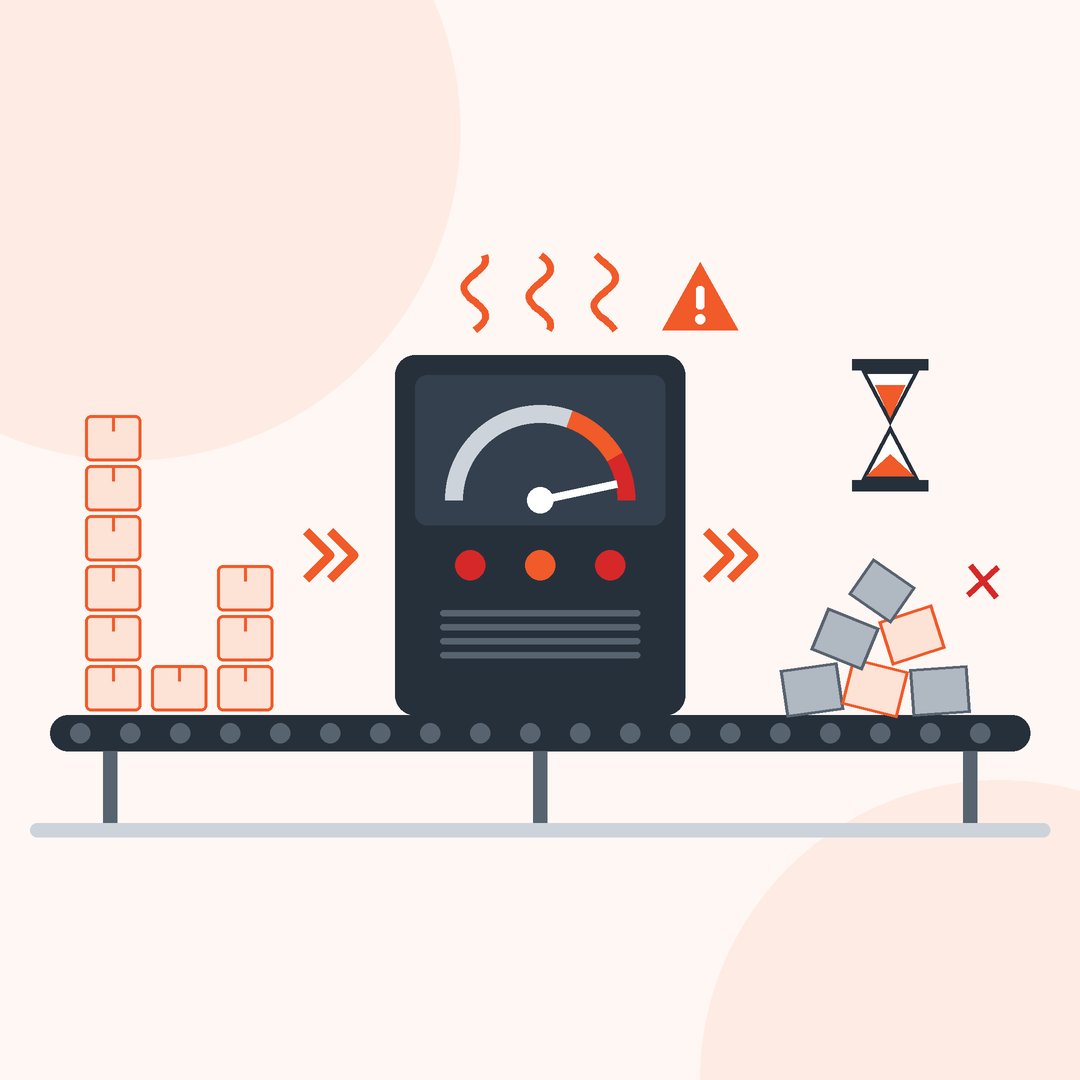
Hidden capacity is the gap between what a machine could produce at its rated speed and quality, and what it actually produces once real-world losses are accounted for. It is “hidden” because it does not show up on a capital budget or an equipment list – it shows up as machine utilization nobody has measured. A press running at 32 strokes a minute instead of its rated 40, or a CNC machine sitting idle between jobs while a scheduler manually figures out what runs next, is hidden capacity in action.
According to OEE.com, most manufacturing companies operate closer to 60% OEE, while world-class performance sits around 85% – meaning a typical plant is already leaving a substantial share of its own capacity on the table before it ever considers a new machine.
Why Manufacturers Sit on Hidden Capacity Without Knowing It
Hidden capacity rarely comes from one dramatic cause. It accumulates from several smaller, everyday operational problems that are easy to overlook individually and expensive to ignore collectively.
- Unplanned downtime that goes untracked or under-recorded
- Idle machines waiting on parts, tooling, or operator availability
- Bottlenecks at one process step that throttle the entire line
- Low OEE caused by a mix of availability, performance, and quality losses
- Inefficient scheduling that leaves capable machines underused while others are overbooked
- Poor visibility into production data, so none of the above gets prioritized or fixed
| Cause | What It Looks Like on the Floor | Capacity It Quietly Eats |
|---|---|---|
| Unplanned downtime | Machines stopped for reasons no one logged consistently | Direct run-time hours |
| Idle machines | Equipment waiting on material, tooling, or an operator | Available-but-unused hours |
| Bottlenecks | One station sets the pace for the entire line | Throughput across the whole process |
| Low OEE | Machines running, but slower or with more rejects than rated | Performance and quality output |
| Inefficient scheduling | Jobs assigned manually, without real-time load data | Balanced capacity across machines |
Machine Utilization vs. Buying More Machines
A new machine adds capacity on paper the moment it is installed. But if the root cause of low output was poor manufacturing capacity utilization on existing equipment, the new machine inherits the same blind spots, it just adds more unmonitored capacity to the pile. Manufacturers who measure machine utilization first, before capital spend, routinely find that the gap between current and potential output on their existing floor is larger than the output a single new machine would add.
The Core Levers of Production Optimization
Recovering hidden capacity is a matter of working three levers together rather than chasing one metric in isolation.
Improve OEE
Since OEE combines availability, performance, and quality into one score, it is the fastest way to see where capacity is actually being lost. Manufacturers who improve OEE through real-time tracking typically find that availability losses, the stoppages nobody wrote down, are the single largest recoverable category.
Smarter Production Capacity Planning
Production capacity planning built on live machine data, instead of last quarter’s spreadsheet, lets a scheduler load jobs onto whichever machine is actually free right now rather than the one that is free on paper.
Higher Manufacturing Throughput
Manufacturing throughput rises fastest when improvement effort targets the true bottleneck station rather than being spread evenly across the line, a principle borrowed directly from the Theory of Constraints.
Lean Manufacturing Principles That Recover Hidden Capacity
Lean manufacturing has always been about removing waste rather than adding assets, which makes it a natural framework for hidden capacity recovery. Two lean tools apply directly:
- Total Productive Maintenance (TPM) reduces the unplanned downtime that quietly erodes availability
- SMED (Single Minute Exchange of Die) shrinks changeover time, freeing up run-time capacity without touching the equipment list
Both tools work far better when paired with data. A lean initiative aimed at the wrong loss category, because nobody had visibility into which category was actually the biggest, wastes the same time and budget a new machine would have.
How Real-Time Monitoring Uncovers Hidden Capacity
Manual tracking cannot see hidden capacity because operators are not going to log every micro-stop, every minute of idle waiting, or every slightly-slow cycle, there simply is not time on a running shift. Real-time machine monitoring closes that gap by pulling stroke rate, cycle time, and stop reasons directly from the machine or controller, the same way it works in this spindle load monitoring case study, where cycle-level visibility uncovered capacity that manual logs had missed entirely.
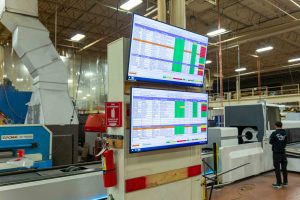
A second example: a shop consolidating monitoring data across multiple machines and operators onto one dashboard, as shown in this multi-machine dashboard rollout, can compare machine-to-machine performance directly and route new work to genuinely available capacity instead of guessing.
A Practical Framework to Recover Capacity in 90 Days
- Measure first. Establish a real OEE and downtime baseline before changing anything.
- Rank losses by cost, not by how visible or frustrating they are day to day.
- Fix the highest-impact category – usually unplanned downtime or a single bottleneck station.
- Re-measure to confirm the fix actually recovered capacity rather than just feeling better.
- Only then evaluate new equipment, using the recovered-capacity number as the real starting point for a capital case.
Measuring the Payback: Capacity Gained vs. Capital Avoided
The financial case for recovering hidden capacity is straightforward once it is measured: every percentage point of OEE improvement on existing equipment is output gained without a purchase order. Use sfHawk’s RoI calculator to model what a specific OEE improvement is worth on your own machines, using your own revenue-per-machine-hour, rather than a generic industry figure.
Turning Hidden Capacity into Competitive Advantage
Buying new machines is the most expensive way to solve a visibility problem. Manufacturers who measure machine utilization, improve OEE, and fix scheduling and bottleneck issues first consistently find more usable output sitting inside their current equipment than a new purchase would have delivered, and they find it without adding a single machine to the floor.
Get Started Today! Book a call with sfHawk | Email: inquiry@sfhawk.com | Phone: +91 91120 98351 | Website: www.sfhawk.com