What Is Machine Monitoring Software?
TL;DR: Machine monitoring software connects to shop floor equipment to capture real-time data on machine status, cycle time, downtime, and output, then turns that data into dashboards and alerts. It is the foundation most manufacturers build their Industry 4.0 and smart factory initiatives on, because you cannot improve OEE, reduce downtime, or plan predictive maintenance without first knowing what your machines are actually doing.
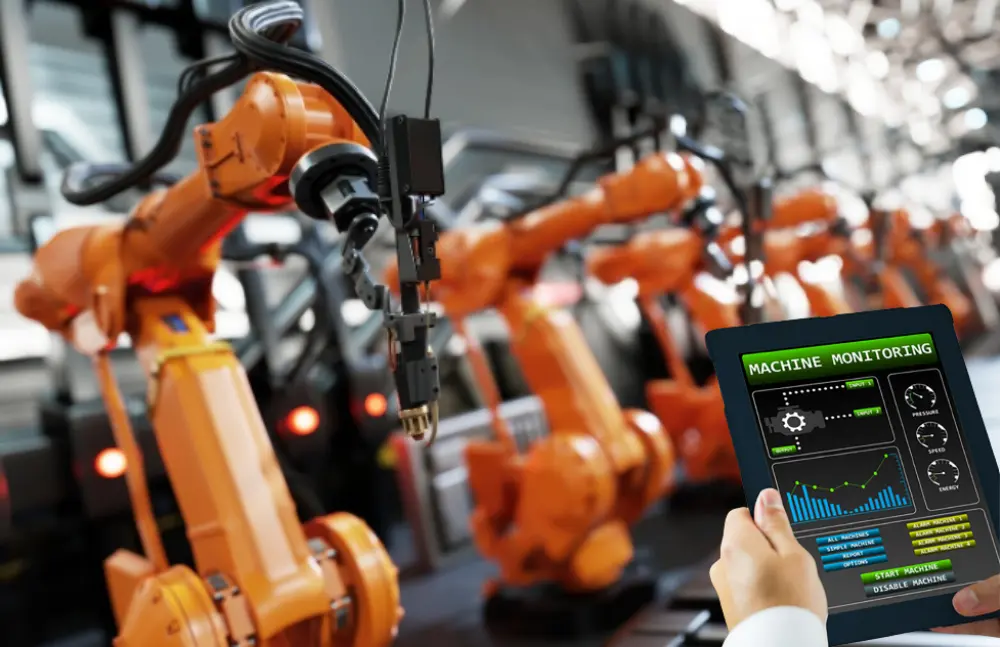
Machine monitoring software is a category of industrial automation software that automatically collects operating data directly from production equipment, sensors, or machine controllers, and presents it in real time through dashboards, reports, and alerts. Instead of relying on operators to write down stop times and output counts on paper, the software captures signals like cycle time, spindle load, stroke count, and stop reasons as they happen. For manufacturers early in their digital transformation journey, it is typically the first system installed, because nearly every other Industry 4.0 initiative depends on the visibility it provides.
How Machine Monitoring Software Works
At its core, machine monitoring software follows a simple data path: it collects signals from the machine, sends them to a central system, and presents them in a form a human can act on.
- Data capture: Signals are pulled directly from the machine’s PLC or controller, or from a retrofit sensor when the machine is older or lacks a digital interface.
- Data transmission: Readings are sent, usually wirelessly, to a central server or cloud platform, either continuously or at short intervals.
- Processing and calculation: The software converts raw signals into meaningful figures, such as OEE, utilization percentage, or downtime by cause.
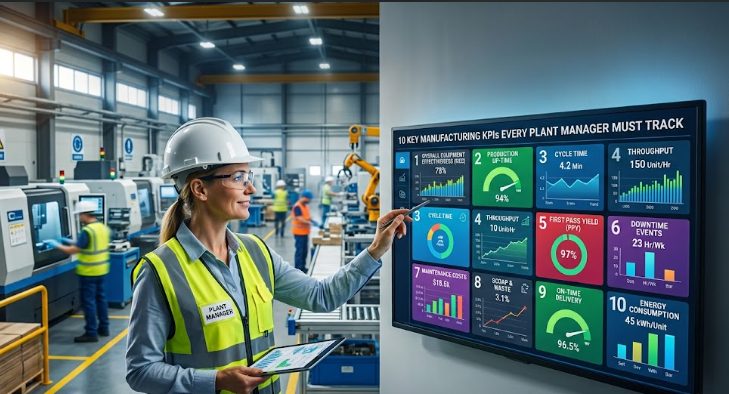
- Visualization and alerts: Results appear on dashboards for operators, supervisors, and managers, with alerts triggered when a machine stops or a threshold is crossed.
This is what makes it a genuine real time production monitoring system rather than a reporting tool: the data reflects what is happening on the floor right now, not what happened at the end of last shift.
What Data Does Machine Monitoring Software Collect?
| Data Point | Typical Source | What It Reveals |
|---|---|---|
| Machine status (run/idle/stopped) | PLC or controller signal | Real-time availability |
| Cycle time | Controller or sensor timing | Performance loss vs. rated speed |
| Stop reason codes | Operator input or automatic fault code | Root cause of downtime |
| Spindle load / tonnage | Machine sensor | Tool wear, die wear, early failure signs |
| Part counts | Sensor or controller | Production output and throughput |
| Quality pass/fail | Inline inspection or manual entry | Rejection rate and first pass yield |
Key Features to Look For
- Real-time dashboards that update continuously rather than refreshing on a delay
- Automatic OEE calculation from live availability, performance, and quality data
- Downtime tracking with root-cause categorization, not just a total stopped-time figure
- Configurable alerts for stoppages, threshold breaches, or maintenance triggers
- ERP and MES integration so production data connects to scheduling and inventory systems
- Historical reporting for trend analysis, benchmarking, and shift or site comparisons
Benefits of Machine Monitoring Software
Real-Time Visibility
The most immediate benefit is simply knowing what is happening on the floor as it happens, rather than reconstructing it from memory at shift end. This alone changes how supervisors respond: a stopped machine gets noticed in minutes, not hours.
Downtime Reduction
Once downtime is captured automatically and categorized by cause, patterns that were invisible in manual logs become obvious, which is what lets teams target the highest-impact category first instead of guessing.
Utilization Tracking
Machine monitoring software separates “the machine is running” from “the machine is producing,” exposing idle time between jobs that manual tracking almost never captures.
OEE Improvement
By automating the availability, performance, and quality calculation that OEE depends on, the software removes the guesswork and inconsistency of manual OEE tracking, and gives teams a live number to work against instead of a monthly average.
Predictive Maintenance
Trending machine data like tonnage, spindle load, or cycle time variance over time turns maintenance from a fixed calendar exercise into a response to actual equipment condition, catching wear before it causes a failure.
Machine Monitoring Software vs. Broader Industrial Automation Software
Machine monitoring software is one category within the wider field of industrial automation software, which also includes PLC programming tools, robotics control systems, and full manufacturing execution systems (MES). The distinction matters for buyers: monitoring software focuses specifically on capturing and visualizing what equipment is doing, while broader automation software may control the equipment itself. Many manufacturers start with monitoring software because it requires no change to how machines are operated, only to how their performance is measured.
Common Use Cases
Machine monitoring software applies wherever equipment runs production, but a few environments show its value especially clearly. In CNC shops, spindle load and cycle time monitoring catches tool wear and cycle drift before they become scrap. In multi-machine cells, a consolidated monitoring dashboard lets a single supervisor track every machine’s status without walking the floor. And in assembly and press operations, stroke rate and stop-reason data reveal micro-stops that would never make it onto a paper log.
Implementation Considerations
- Connectivity: Confirm whether your machines have a digital interface or will need retrofit sensors.
- Integration: Check compatibility with your existing ERP, scheduling, and maintenance systems.
- Scalability: A pilot on a handful of machines should extend cleanly to a full plant rollout later.
- Operator adoption: Framing the system as a problem-solving tool, not surveillance, makes a measurable difference in how quickly data quality improves.
- Reporting needs: Confirm the software produces the specific OEE, downtime, and utilization reports your team actually needs, not just generic dashboards.
The Foundation of Smart Manufacturing
The National Institute of Standards and Technology describes smart manufacturing as the convergence of operating technology and information technology working together on the shop floor, and machine monitoring software is typically what makes that convergence possible in practice. Predictive maintenance programs need equipment history. Scheduling optimization needs real utilization data. Quality initiatives need production context. All of it traces back to the same source: connected, real-time machine data. This is why smart manufacturing software initiatives, and Industry 4.0 roadmaps generally, tend to start with monitoring rather than with more advanced automation, since every later stage depends on the visibility monitoring provides. sfHawk’s production monitoring solution is built as exactly that starting point.
Frequently Asked Questions
What is the difference between machine monitoring software and a production monitoring system?
The terms are largely used interchangeably. “Machine monitoring software” tends to emphasize equipment-level data like cycle time and status, while “production monitoring system” often implies a broader view that includes output, scheduling, and multi-machine dashboards. In practice, most platforms today combine both.
Do I need to replace my machines to use machine monitoring software?
No. Most machine monitoring software connects to existing machines, either through a digital interface already built into the controller or through a retrofit sensor added to older equipment. Replacing machines is rarely necessary just to start monitoring them.
How is machine monitoring software different from an MES?
Machine monitoring software focuses on capturing and visualizing equipment performance data in real time. A Manufacturing Execution System (MES) is broader, typically managing work orders, scheduling, and traceability in addition to performance data. Many manufacturers start with monitoring software and add MES capabilities later as needs grow.
What is real-time production monitoring, specifically?
Real-time production monitoring means machine data is captured and displayed as it happens, typically within seconds, rather than being compiled into a report after the fact. This is what allows a supervisor to react to a stoppage or quality issue during the shift it occurs, instead of learning about it the next day.
Is machine monitoring software only for large manufacturers?
No. Machine monitoring software scales to shops of any size, and smaller operations often see a faster payback since a single problem machine represents a larger share of their total capacity. A focused pilot on a few machines is a common, low-risk starting point regardless of plant size.
Where to Start
Machine monitoring software is rarely the most advanced piece of a smart factory strategy, but it is almost always the first one that has to work. Before evaluating predictive maintenance platforms, scheduling optimization, or AI-driven quality systems, it is worth confirming that the basic question, what is my equipment actually doing right now, has a reliable answer.
Get Started Today! Book a call with sfHawk | Email: inquiry@sfhawk.com | Phone: +91 91120 98351 | Website: www.sfhawk.com