
Author
Abhimanyu Chaturvedi
Chief Operating Officer, sfHawk
Abhimanyu Chaturvedi is the Chief Operating Officer of sfHawk, based in Pune, where he leads shop-floor digitisation programmes for discrete manufacturers across India.
He studied at BITS Pilani's Goa campus and began his career well away from the factory floor, first at American Express, then at Rapido, building and running operations at consumer scale. That grounding shapes how he approaches manufacturing today: instrument the process, measure what actually happens rather than what gets reported at end of shift, and design systems that the people on the ground will use without being told to.
His expertise now spans the full sfHawk portfolio, machine monitoring, OEE, production and process monitoring, condition monitoring, and manufacturing, batch and lot traceability and the thread running through all of it is the same: get trustworthy data off the machine, and the rest becomes solvable.
That begins with connectivity. Abhimanyu has led deployments across CNCs, PLCs and controllers of every vintage and protocol, including legacy assets their own makers no longer support, proving that a plant does not need new machines to become a smart factory. From that foundation he has built out real-time production monitoring, automated downtime and reason-code capture, digital job cards that replace paper on the line, condition monitoring that moves maintenance from calendar-driven to evidence-driven, and end-to-end traceability that satisfies tier-one and OEM audits at batch, lot and part level.
He is equally at home in the commercial conversation, where OEE gains actually come from, why a 20% improvement is realistic, and how monitoring data earns its place inside ERP rather than beside it.
He writes on machine connectivity, OEE, traceability and the practical economics of Industry 4.0 for plants built long before anyone used the term.
Connect on LinkedIn Book a meeting
50 articles published
Areas of expertise
- Industrial IoT
- Machine connectivity
- OEE improvement
- Shop-floor digitisation
- Production monitoring
- Traceability
Articles by Abhimanyu Chaturvedi
20 Nov, 2026
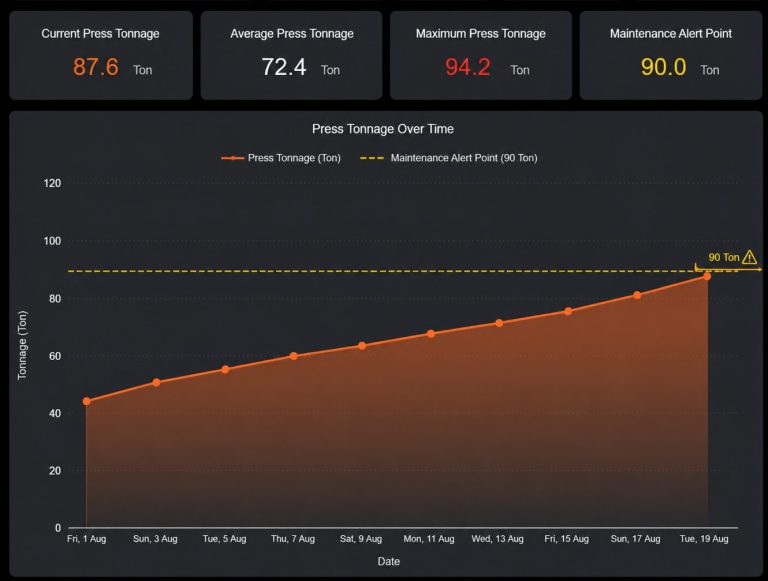
X-Bar and R Charts Explained: Formulas and a Worked Example
How an X-bar and R chart works, how to calculate the center line and control limits, and how to read an out-of-control…
Read article →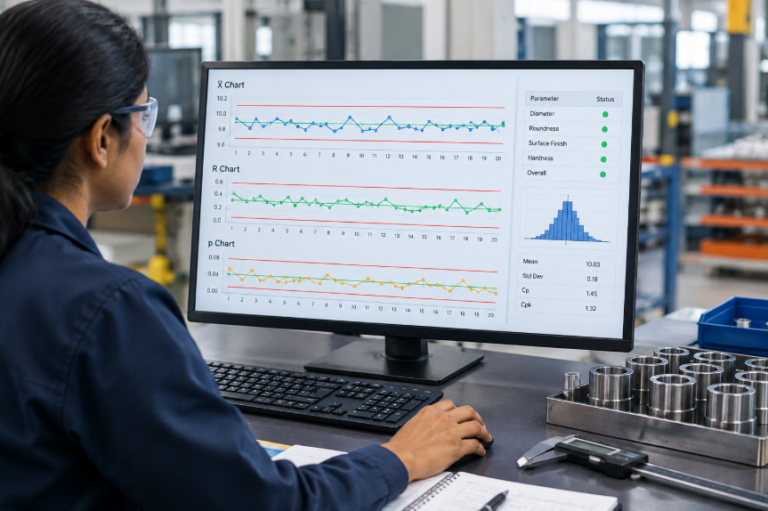
17 Nov, 2026
Statistical Process Control (SPC): A Practical Guide to Control Charts in Manufacturing
What SPC is, how control charts separate normal variation from real change, and how to build an X-bar and R chart. TL;DR:…
Read article →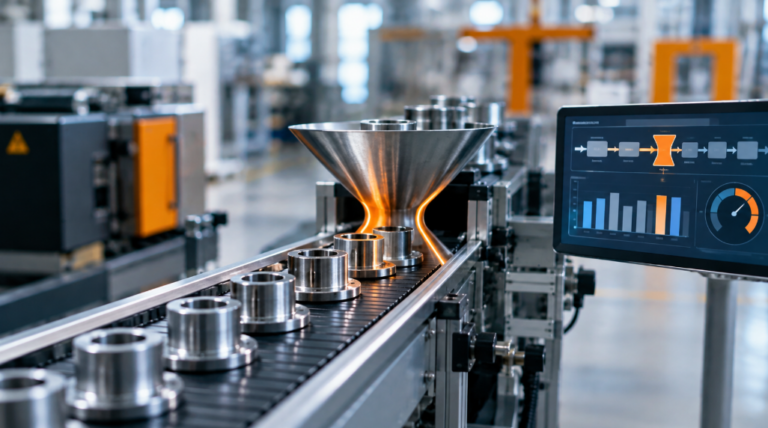
12 Nov, 2026
Theory of Constraints in Manufacturing: How to Find and Manage the Real Bottleneck
How the Theory of Constraints finds the one resource that limits throughput: five focusing steps, bottleneck analysis and Drum-Buffer-Rope. TL;DR: The Theory…
Read article →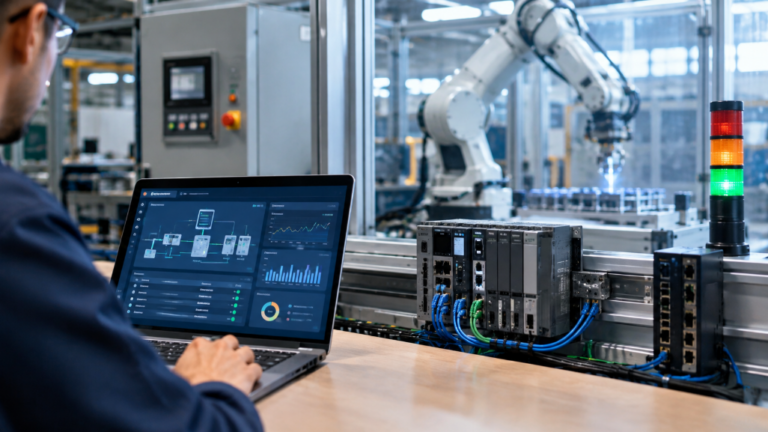
29 Oct, 2026
OPC UA in Manufacturing: What It Is, How It Works and Where It Fits
A plain explanation of OPC UA: architecture, key terms, security, and how it compares with MQTT and MTConnect. TL;DR: OPC UA (Open…
Read article →
28 Oct, 2026
Jidoka in Lean Manufacturing: Building Quality Into the Process
What jidoka means, its four steps, how it differs from Poka Yoke and Andon, and examples beyond Toyota. TL;DR: Jidoka is the…
Read article →
26 Oct, 2026
Condition-Based Maintenance vs Preventive and Predictive Maintenance
A decision guide to condition-based, preventive and predictive maintenance, with a comparison matrix, a decision tree and an implementation checklist. TL;DR: Preventive…
Read article →
23 Oct, 2026
TEEP vs OEE: Which Metric Shows Your Factory’s True Capacity?
TEEP and OEE use different time bases. See both calculated for the same plant, with formulas, a 24 hour timeline and guidance…
Read article →
21 Oct, 2026
Scrap Rate, Rework and First Pass Yield: The Quality Metrics That Reveal Hidden Production Loss
How to calculate scrap rate, rework rate and first pass yield from one production run, and why output counts alone hide what…
Read article →
19 Oct, 2026
Line Balancing in Manufacturing: How to Reduce Bottlenecks and Uneven Workloads
How line balancing removes bottlenecks, with a Yamazumi example, a before and after calculation and the role of measured cycle and idle…
Read article →
16 Oct, 2026
Kanban in Manufacturing: How Pull Systems Control WIP and Production Flow
How a Kanban system uses cards and signals to cap work in progress, with a worked shop floor example and a comparison…
Read article →
14 Oct, 2026
Cp and Cpk Explained: How to Measure Process Capability in Manufacturing
The Cpk formula, how Cp differs from Cpk, what the values mean and how control limits differ from specification limits, with a…
Read article →
12 Oct, 2026
The 8 Pillars of TPM: A Practical Guide to Total Productive Maintenance
What each TPM pillar covers, how autonomous maintenance fits in, and what a real implementation roadmap looks like on the shop floor.…
Read article →