What each TPM pillar covers, how autonomous maintenance fits in, and what a real implementation roadmap looks like on the shop floor.
TL;DR: Total Productive Maintenance (TPM) is a manufacturing management system built on 8 pillars that aim to eliminate equipment losses through operator involvement, structured maintenance, and continuous improvement. The pillars cover autonomous maintenance, planned maintenance, training, safety, early equipment management and more, working together rather than as standalone programs.
Key Takeaways
- TPM is a management system: It is not a maintenance department initiative, and it depends on operators, not just technicians.
- Start with autonomous maintenance: It is usually the first pillar implemented and the one that determines whether the rest of TPM sticks.
- The pillars reinforce each other: Each has its own objective and metric, but quality losses, downtime, and abnormalities all trace back to the same equipment data.
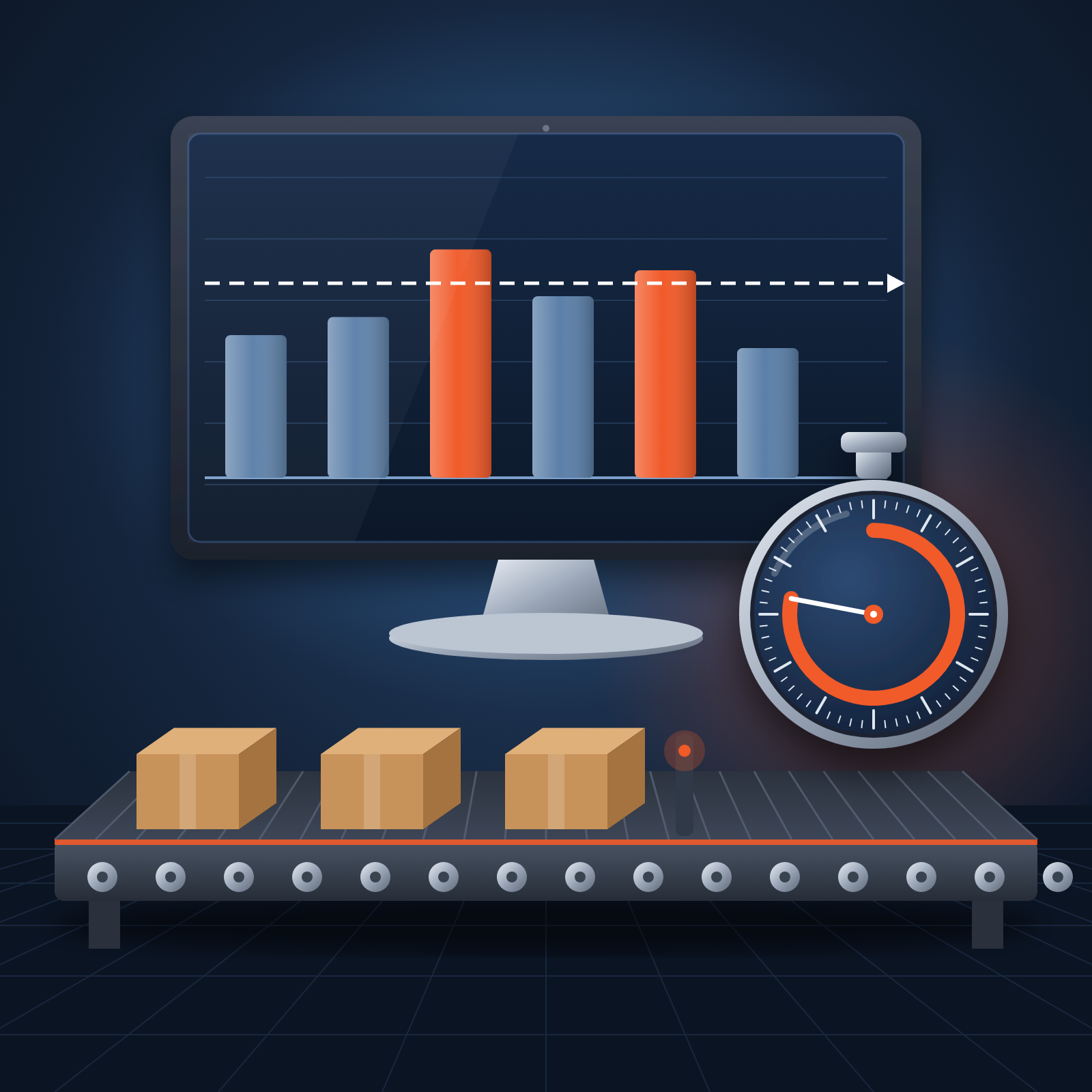
- OEE is the common yardstick: TPM is most often measured through OEE, so downtime, quality, and speed-loss visibility underpin every pillar’s progress.
The 8 TPM Pillars at a Glance
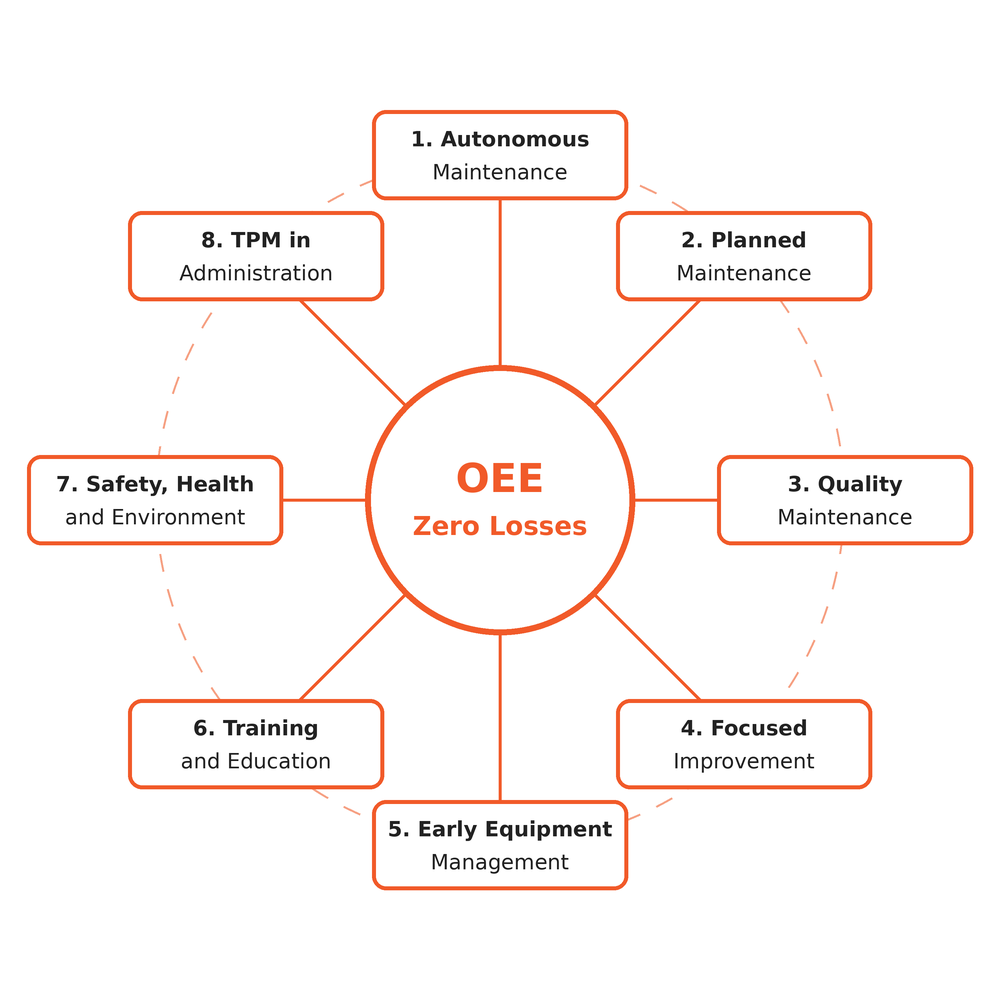
The TPM pillars are best understood as a set, since each one reinforces the others rather than working as a standalone program.
| Pillar | Objective | Example on the Floor | Metric to Watch |
|---|---|---|---|
| 1. Autonomous Maintenance | Operators own basic upkeep of their own equipment | Daily cleaning, lubrication and inspection checklist at the machine | Number of abnormalities caught by operators |
| 2. Planned Maintenance | Shift from reactive to scheduled, data-driven maintenance | Maintenance calendar built from failure-history and MTBF data | Planned vs. unplanned maintenance ratio |
| 3. Quality Maintenance | Prevent defects by controlling equipment conditions | Machine parameters linked to specific defect types | Defect rate tied to equipment condition |
| 4. Focused Improvement | Small cross-functional teams attack chronic losses | Kaizen event targeting a specific bottleneck machine | Reduction in a targeted loss category |
| 5. Early Equipment Management | Design new lines to be easy to maintain and operate | Maintenance and operators review layouts before install | Time to stable production after startup |
| 6. Training and Education | Build operator and technician skill systematically | Skill matrix mapped against each workstation | % of roles at target skill level |
| 7. Safety, Health and Environment | Zero accidents and a safe, compliant workplace | Risk points identified during autonomous maintenance checks | Near-miss and incident rate |
| 8. TPM in Administration | Apply the same loss-elimination thinking to office and support functions | Reducing delays in spare-parts ordering or work-order approval | Administrative lead time |
Autonomous Maintenance: Why It Gets Special Attention
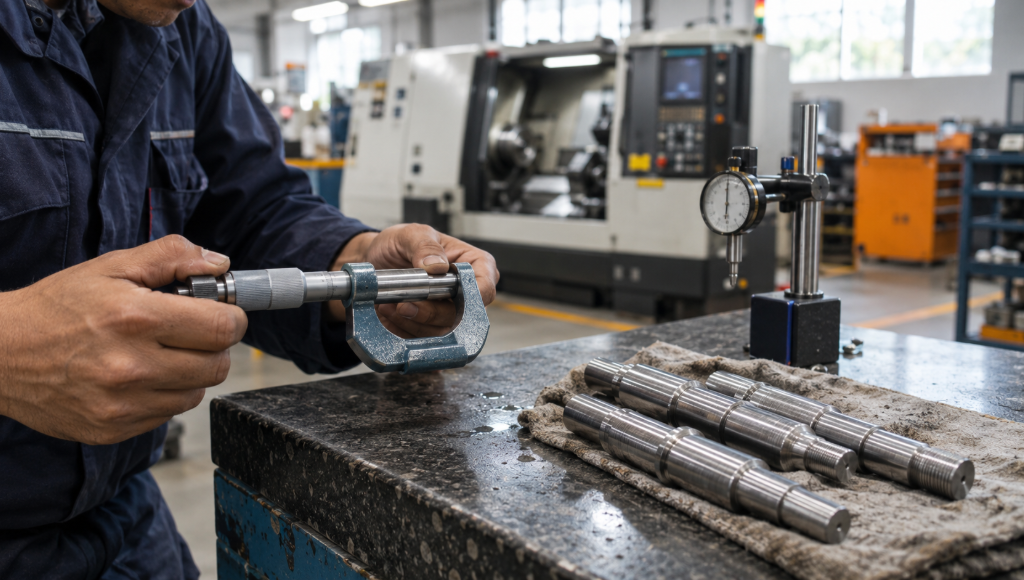
Autonomous maintenance is usually where TPM starts, and it is worth treating as its own focal point rather than folding it into a general pillar list. The core idea is simple: operators, not just maintenance technicians, take ownership of the basic care of their equipment, including cleaning, lubricating, inspecting, and tightening on a routine schedule. That routine contact is what surfaces abnormalities such as a leak, a vibration, or a loose fitting long before they become a breakdown.
This matters beyond the maintenance function. Autonomous maintenance is the mechanism that shifts equipment ownership from “not my job” to “my machine,” and plants that skip it tend to see the rest of TPM stall. Planned maintenance schedules get built without operator input, and focused improvement teams lack floor-level insight into what is actually going wrong.
“TPM fails the moment people treat it as a maintenance program with an operator checklist bolted on. It’s a management system, and the checklist is just the visible part.”
Plant Manager, industrial equipment manufacturing
A TPM Implementation Roadmap
Rolling out the TPM pillars in sequence, rather than all at once, is what makes the system stick:
- Select a pilot line or area: Establish a baseline OEE, downtime, and quality picture before changing anything.
- Launch autonomous maintenance first: Clean, inspect, and tag abnormalities to build operator ownership and surface hidden issues.
- Build a planned maintenance schedule: Convert recurring failure data into a schedule instead of staying reactive.
- Stand up a focused improvement team: Attack the single largest chronic loss identified in the baseline.
- Layer in quality maintenance: Do this once equipment conditions are stable enough to correlate with defect data.
- Expand and scale: Add training, safety, and early equipment management as the pilot area matures, then move to the next line.
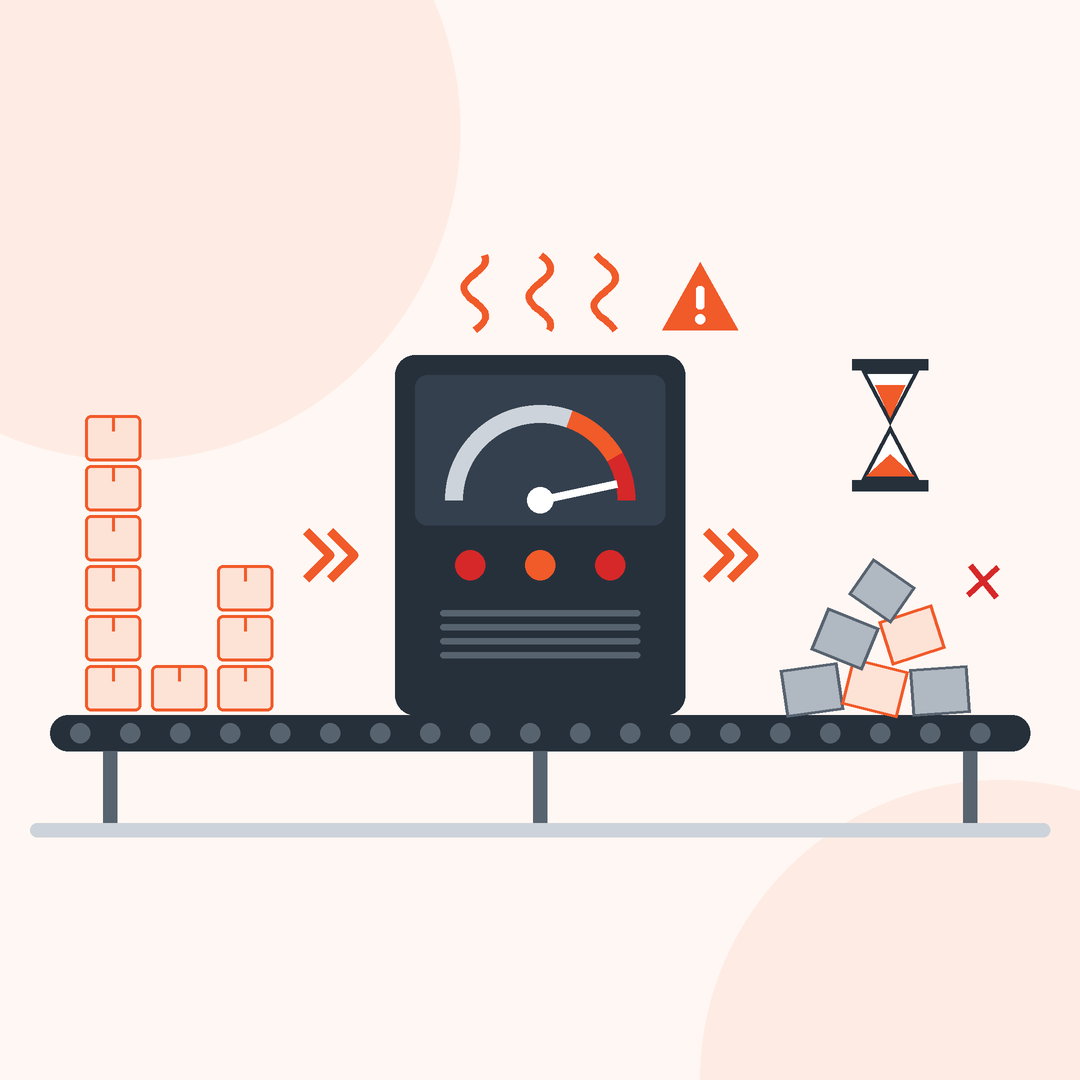
The pillars that measure losses, downtime, maintenance triggers, abnormalities, and quality all depend on the same underlying equipment data. A platform like sfHawk can give operators and maintenance teams shared visibility into that data through machine monitoring. It can flag abnormalities from autonomous maintenance checks using condition monitoring, track planned-vs-unplanned maintenance ratios, and feed OEE and quality metrics back to the same teams running the pillars, rather than leaving each pillar to track its own numbers in isolation.
Frequently Asked Questions
What are the 8 pillars of TPM?
The 8 TPM pillars are autonomous maintenance, planned maintenance, quality maintenance, focused improvement, early equipment management, training and education, safety/health/environment, and TPM in administration. Each targets a different source of equipment or process loss.
TPM vs preventive maintenance: what is the difference?
Preventive maintenance is a single practice: servicing equipment on a schedule to prevent failure. TPM is a broader management system that includes preventive maintenance as one part of planned maintenance, alongside operator-led autonomous maintenance, training, quality, and safety. It aims at eliminating losses, not just scheduling service.
TPM vs lean manufacturing: how do they relate?
TPM is generally considered one of the pillars that supports lean manufacturing, focused specifically on equipment reliability and loss elimination. Lean is the broader philosophy of eliminating waste across the entire value stream, of which equipment-related loss is one category TPM directly addresses.
What is autonomous maintenance in TPM?
Autonomous maintenance is the TPM pillar where machine operators take responsibility for routine equipment care, including cleaning, lubrication, inspection, and minor adjustments, rather than leaving all upkeep to the maintenance department. It is typically the first pillar implemented because it builds the operator ownership the rest of TPM depends on.
Related Reading
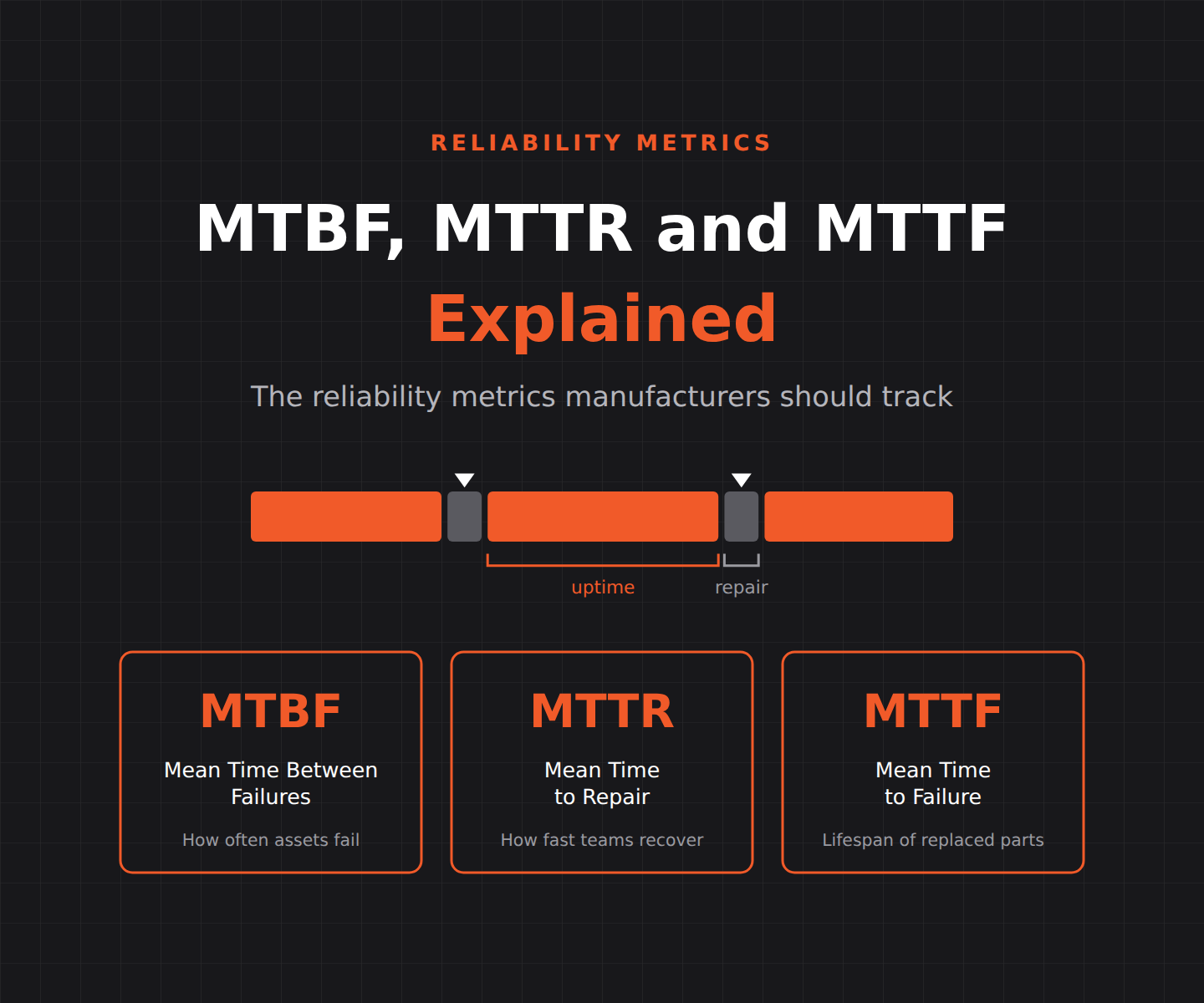
TPM’s pillars are easiest to sustain when the underlying data is visible in real time. See how OEE monitoring ties equipment losses together, and how MTBF and MTTR quantify the reliability gains TPM is meant to produce. For the losses TPM targets, read about the causes of downtime in manufacturing and how micro stoppages kill your OEE. To move from scheduled to data-driven upkeep, see industrial IoT predictive maintenance and machine downtime tracking software. For the wider picture, explore the 10 manufacturing KPIs every plant manager should track.
Get Started Today! Book a call with sfHawk | Email: inquiry@sfhawk.com | Phone: +91 91120 98351 | Website: www.sfhawk.com